
Hardscaping in Kissimmee, FL: Soil, Drainage, and Climate Factors
Properties in Kissimmee, FL and St. Cloud sit close to each other on a map, but they do not behave the same way underfoot. Kissimmee properties near the chain of lakes corridor tend to have flatter grades, higher water tables, and soil that holds moisture longer than many homeowners expect. St. Cloud parcels, particularly east of Narcoossee Road, often sit on slightly higher ground with sandier profiles that drain faster but shift more. Those differences matter for hardscaping in Kissimmee, FL because the same paver patio design that performs well on one property can heave, settle, or flood on another just a few miles away. Understanding why starts with the ground itself.

Central Florida Soil Is Not What Most People Picture
Florida has a reputation for sand, and there is truth to that. UF/IFAS explains that Florida soils vary widely, and Osceola County properties can include sandy profiles, low-organic soils, and wetter areas near creeks, lakes, and older drainage corridors. Around the Shingle Creek watershed and older neighborhoods closer to downtown Kissimmee, you may also encounter muck or hydric conditions just below the surface. These soils formed under wet conditions over long periods, and they can compress under load in ways that clean sand does not.
For landscape and hardscape installations, this means base preparation is not optional. A paver driveway, walkway, or patio installed over poorly compacted subsoil without proper base depth and drainage consideration will move. We see this frequently on older installs across the region, where corners lift, joints open, and water pools in places it never should. The fix is rarely the surface material. It is almost always what was done, or not done, below it.
What Hardscaping in Kissimmee, FL Has to Account For Climatically
Kissimmee sits in USDA Hardiness Zone 9b, which means mild winters and long, intensely hot, wet summers. Osceola County sees the bulk of its rainfall between late spring and early fall, often in concentrated afternoon thunderstorms. A single summer storm can overwhelm a flat yard quickly. That is not a design edge case. It is normal Central Florida weather.
Hardscape surfaces that do not account for this volume of water create problems quickly. Impermeable poured concrete across a large area with no grade or drainage outlet can sheet water toward foundations, landscape beds, or neighboring properties. The EPA notes that permeable pavement can help stormwater soak into the ground instead of running off the surface when the system is designed correctly. In Celebration and newer planned communities around Kissimmee, stormwater management is often built into the development infrastructure, but in older residential areas, that burden can fall much more heavily on the individual property.
Heat is the other factor. Exposed concrete and darker pavers can become uncomfortable in direct summer sun, especially around patios, walkways, and pool areas. Reflected heat from hardscape can also stress adjacent plantings, which is why irrigation design, planting choices, and hardscape layout should be planned together rather than separately.
How Native Ecology Shapes Landscape Design Around Hardscape
Osceola County’s native plant communities include flatwoods, scrub, freshwater marsh edges, and hammock transitions. Native and Florida-friendly species such as saw palmetto, wax myrtle, firebush, and muhly grass are adapted to wet and dry cycles. They can also reduce the amount of supplemental irrigation needed once established, which matters when water movement is already one of the main design concerns around patios, walkways, and driveways.
This matters for hardscaping in Kissimmee because the plant material chosen to border a patio or line a walkway will interact with that surface for years. Aggressive ground covers, certain palm species with wide surface root systems, and fast-growing tropical shrubs can all work against hardscape integrity over time. A landscape design that treats planting and hardscape as one integrated system tends to hold up far better through Kissimmee’s climate cycles.
Seasonal Timing and What April Means for Installation
April sits at an important point in Central Florida’s seasonal calendar. The dry season is winding down, soil moisture is often lower, and ground conditions are typically better for excavation and base preparation than they are after the summer rain pattern settles in. For homeowners considering patio, walkway, or driveway projects, late spring installation ahead of the wettest months gives the base and finished surface time to settle before heavier storms become routine.
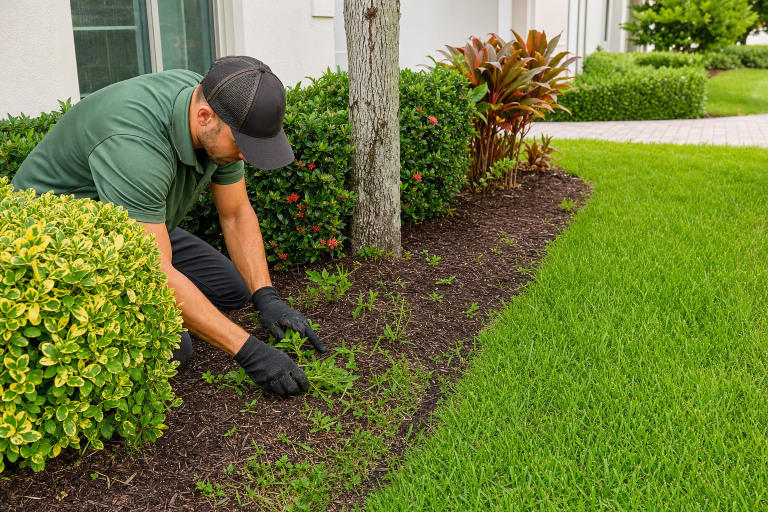
It is also a good window for the surrounding landscape maintenance work that hardscape projects typically disrupt, including sod repairs, bed edging, and replanting disturbed areas. Projects completed in April and May often look more established by fall because the summer growing season helps surrounding lawn and landscape areas recover naturally.
Common Questions About Hardscaping in Kissimmee
Why does soil type matter for hardscaping in Kissimmee, FL?
Soil type affects drainage, compaction, and how much a patio, walkway, or driveway may settle over time. Sandy, wet, or poorly compacted subsoil needs the right base depth and drainage strategy before pavers or concrete go in.
What is the best time of year to install hardscaping in Kissimmee?
Late spring is often a strong window because the dry season is ending and the wettest summer pattern has not fully arrived. The best timing still depends on site access, drainage, material choice, and the surrounding landscape work.
Are permeable pavers a good option in Central Florida?
They can be, especially where runoff is a concern. The key is proper design. Permeable pavers only perform well when the base, aggregate, slope, and soil conditions are evaluated correctly.
Plan the Hardscape Around the Property, Not Just the Material
If you are planning a patio, walkway, driveway, or other hardscape project, the smartest design starts with how your specific property’s soil, drainage, sun exposure, and surrounding landscape work together. Reach out to Elite Lawn Pros LLC before committing to materials or layout. The decisions made at the planning stage are almost always easier and less expensive than corrections made after installation.