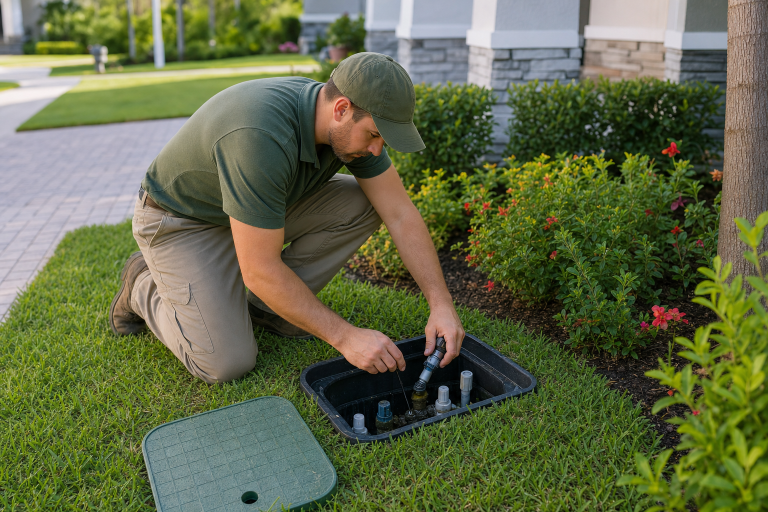

Irrigation Hydrozones for Central Florida Landscapes
A Central Florida yard rarely has one watering need from property line to property line. Irrigation hydrozones are the practical way to divide a landscape before pipes, heads, drip lines, and controller programs are chosen.
For homeowners in Central Florida, including Kissimmee and St. Cloud, hydrozoning helps make irrigation design fit the actual yard instead of forcing turf, shrubs, shaded beds, slopes, and sunny corners onto the same watering pattern.
Why irrigation hydrozones matter before installation
A hydrozone is a section of the landscape grouped by similar watering needs and irrigation method. The idea is simple: areas that dry out at similar rates and need similar application styles can usually be scheduled together. Areas that behave differently should be separated whenever the system design allows it.
This matters because a front lawn in full sun, a narrow side yard in shade, and a foundation bed with shrubs are not asking for water in the same way. If they are all tied to the same sprinkler zone, the controller can only run them as one group. One area may be too wet while another still looks stressed.
Good irrigation services start with looking at the property as a set of conditions, not just a drawing with sprinkler heads. Hydrozones give that review a structure.
The University of Florida IFAS Extension notes that grouping plants with similar water needs is one part of Florida-Friendly Landscaping principles, along with placing plants where they can perform well in the landscape. Their guidance on right plant, right place and efficient watering supports the same practical idea behind hydrozoning.
Turf and planting beds should not be treated the same
Turf areas and planting beds often need different irrigation approaches. Turf is usually watered with spray heads or rotors that cover an open surface. Planting beds may include shrubs, ornamentals, palms, annuals, mulch, rock, and irregular shapes around patios or walkways.
When turf and beds are mixed on the same zone, the sprinkler layout may have to compromise. Heads that are aimed to cover grass can overspray into mulch or onto hard surfaces. Heads placed to reach a bed may not create even coverage across the lawn.
For landscape design and installation, hydrozoning should be discussed before plants are installed. A bed filled with drought-tolerant plants should not be grouped casually with thirsty turf just because the areas are close together. Plant selection, bed shape, and irrigation layout work best when planned as one system.
Sun, shade, soil, and slope all change watering behavior
Sun exposure is one of the easiest hydrozone clues to see. South and west-facing areas often dry faster than shaded side yards or beds under tree canopy. A controller schedule that fits the sunny strip near the driveway may be too much for a shaded side yard where soil stays damp longer.
Soil and drainage also affect zone design. Some Central Florida properties have sandy areas that drain quickly. Others include compacted soil, fill, low pockets, or areas where roof runoff collects. Two parts of the same yard can respond very differently after rain or irrigation.
Slope adds another layer. Water applied too quickly on a slope may move across the surface instead of soaking in evenly. That does not automatically mean a system is wrong, but it does mean head type, run time, spacing, and scheduling deserve extra attention.
Before installation, a contractor should be asking questions such as:
- Where does water sit after heavy rain?
- Which areas stay shaded most of the day?
- Are there slopes, narrow strips, or raised beds?
- Is the soil loose, compacted, sandy, or mixed?
- Will new plants or sod be installed soon?
These observations help shape sprinkler zones that are easier to manage after the system is in the ground.
Matching sprinkler zones to plant needs and equipment
Hydrozoning is not only about plants. It is also about irrigation equipment. Rotors, spray heads, and drip components apply water differently, so they usually should not be mixed casually on one zone.
Rotors are commonly used for larger turf areas because they throw water farther and rotate across an arc. Spray heads are often used in smaller turf spaces, narrow areas, or zones where shorter throw patterns make more sense. Drip or low-volume irrigation may be considered for certain planting beds, containers, or areas where overhead spray would be difficult to control.
The challenge is that each method has its own coverage style and operating needs. A rotor zone and a spray zone may not apply water at the same rate. A drip section may need a different layout and schedule than overhead sprinklers. If those methods are combined without a clear reason, the controller loses flexibility.
This is where irrigation system design becomes more than placing heads around the edge of a lawn. It means deciding which areas can share a valve, which areas need separation, and where different sprinkler types belong.
Plant needs matter too. New plantings, established shrubs, turf, and ornamental beds should be evaluated by how they are expected to grow and how often they are likely to need irrigation once established. A temporary need during establishment should not always dictate the permanent zone layout.
Pressure, coverage, and sprinkler zones must work together
A hydrozone still has to function hydraulically. The best grouping on paper can struggle if the available pressure, flow, pipe layout, and head spacing are not considered. Too many heads on one zone can affect performance. Poor spacing can leave dry edges or create overlap that does not match the landscape.
Homeowners often use the phrase sprinkler zones to mean whatever turns on together. In design terms, each zone should be a practical match between the landscape need and what the system can deliver. The valve, heads, nozzle choices, spacing, and controller program all have to support that match.
This is also why design is different from repair. A repair visit may replace a broken head, adjust a nozzle, find a leak, or solve a zone that will not run. A design conversation asks a different question: should this area have been grouped this way in the first place?
If your current system is already installed, an irrigation maintenance inspection can identify coverage issues, damaged parts, or scheduling concerns. If you are planning new work, hydrozones should be addressed before trenches, valves, and heads are set.
Planning for future landscape changes
Many irrigation problems begin when the landscape changes but the system does not. A bed gets expanded. A tree canopy grows. A patio is added. Turf is replaced with ornamental plants. New sod is installed over an area that used to be a mixed planting bed.
Before installing a new system, think about how the yard may change over the next few years. If you plan to add privacy plantings, widen beds, or redesign the front entry, mention it during the design discussion. The system may not be able to predict every future project, but clear planning can reduce avoidable conflicts.
This is especially important for homeowners in Kissimmee and St. Cloud, where new homes, renovated yards, and changing outdoor living spaces are common. A lawn and garden irrigation plan should support the way the property is actually used.
Frequently Asked Questions
What is an irrigation hydrozone?
An irrigation hydrozone is an area of the landscape grouped by similar watering needs, site conditions, and irrigation method. Turf, planting beds, sun exposure, soil, slope, and sprinkler type can all affect how zones are planned.
Can turf and planting beds be on the same sprinkler zone?
They can be in some layouts, but it is often better to separate them when practical. Turf and beds may need different sprinkler types, coverage patterns, and controller schedules.
Is hydrozoning the same as repairing an irrigation system?
No. Hydrozoning is a design decision made when planning or modifying a system. Repairs focus on fixing existing parts such as broken heads, valves, leaks, wiring, or coverage problems.
Should I plan hydrozones before new landscaping is installed?
Yes. It is best to discuss hydrozones before major planting, sod, bed expansion, or irrigation installation so the system can match the final landscape layout as closely as possible.
Design your irrigation around the yard you actually have
Irrigation hydrozones are not a fancy design extra. They are a practical way to make irrigation installation fit Central Florida yards with mixed turf, planting beds, shade, sun, slopes, and changing landscapes.
If you are planning a new irrigation layout or updating your landscape before installation, Elite Lawn Pros can help evaluate the property and talk through sensible zone design. Contact Elite Lawn Pros or call (689) 314-7017 to discuss irrigation services in Central Florida, including Kissimmee and St. Cloud.