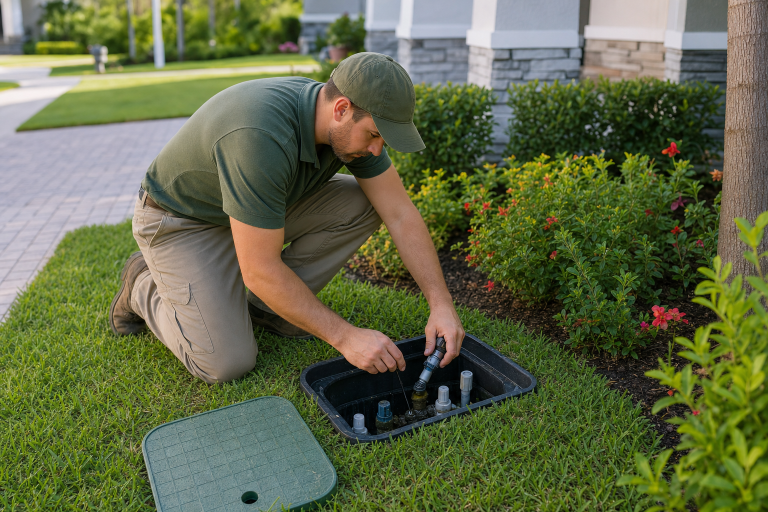

Sprinkler System Cost in Central Florida: What Drives the Price
There is no honest flat number for a Central Florida sprinkler system, because the price depends on the property: how many zones it needs, what type of heads and pipe go in, your water source, and how much digging and repair is involved. The fair way to compare is by what each quote includes, not the bottom line.
How much should a sprinkler system cost in Central Florida?
Searching “how much does a sprinkler system cost in Florida” turns up wide ranges, and there is a reason for that. A small, flat, rectangular yard with city water and one type of turf is a very different job from a corner lot with curved beds, mature oaks, a long driveway to cross, and a well for water.
A phone estimate can be reasonable for a very simple yard, but for most properties a price given without seeing the lot is a rough guess. We are not going to print a dollar range here, because it would be wrong for many of the people reading it. Knowing what moves the price will help you understand why quotes differ when they come in. Early fall is a good time to do this homework. The dry season is coming, and planning now beats scrambling in spring when everyone wants their system running.
What factors drive the price of an irrigation install?
Most of the cost comes down to a handful of things:
- Number of zones. Each zone is a section of the yard run by its own valve. More zones mean more valves, more wire, more pipe, and more labor.
- Lot size and layout. Bigger or oddly shaped yards need more heads and more pipe to get even coverage.
- Head and zone types. Spray heads, rotors, and drip lines each have different parts and labor. Turf, shrub beds, and planters usually should not share a zone, because they need different amounts of water.
- Water source. City water, reclaimed water, and a private well all change the parts list. Wells often add pump and filtration considerations, and iron in the water can stain hardscape if the design does not account for it.
- Site obstacles. Driveways, walkways, patios, tree roots, and existing utilities all affect how pipe gets from one side of the yard to the other. Going under hardscape takes more time than going across open lawn.
- Controller and sensors. A basic timer and a smart controller with a rain sensor are not the same line item.
- Restoration. Trenching or pulling pipe disturbs sod and beds. Some quotes include cleanup and patching, others do not.
- Permits and backflow. Requirements vary by city and county, so check with your local building or utilities office about what applies to your address.
Is irrigation priced per hour, per zone, or per project?
It depends on the company and the type of work. New installs are most commonly quoted as a single project price built from the items above. Some companies break it out by zone, which can make comparing easier.
Repairs and maintenance are often handled differently, either as a service visit plus parts or by time on site. There is no universal rule, so ask how each company bills before you book. The question to get answered is simple: what is included in the visit, and what counts as extra?
What does a repair or maintenance visit usually cost compared with a new install?
A repair or tune-up is almost always a small fraction of an install, since you are fixing or adjusting what is already in the ground. What the visit costs depends on what is wrong and how long it takes to find it.
Common issues include broken or clogged heads, a stuck valve, a cut wire, a leak in a pipe, or a controller that was never reprogrammed for the season. A good inspection walks every zone, looks at coverage, checks for leaks and overspray, and confirms the schedule matches the plants.
Startups are a similar, smaller category. Turning a system back on after it has sat idle means checking for damage and leaks before you start running water, not just flipping the controller to “on.”
How do you compare irrigation quotes line by line?
Two quotes with very different totals often describe two very different systems. Put them side by side and check each of these:
- Zone count. Are both quotes using the same number of zones?
- Coverage plan. Does the quote say what types of heads go where? Ask whether the design gives head-to-head coverage or leaves dry gaps.
- Pipe and valves. Is the material named? Are valves and a valve box count listed?
- Controller and rain sensor. Which model, and is a rain sensor included?
- Backflow prevention. Is it included, and is it installed to local requirements?
- Water source. Does the quote account for whether you are on city water, reclaimed, or a well?
- Restoration. Who repairs the trenches and sod, and is it in the price?
- Startup and programming. Will someone set the schedule and show you how the controller works?
- Permits. Is the permit handled and included, or is it on you?
- Written terms. Whatever a company says about workmanship or follow-up service, get it in writing.
If a quote is a single line that says “irrigation system, one price,” ask for more detail. A vague quote makes it easy to be surprised later by change orders.
What can you do to keep irrigation costs down over time?
A system that is designed well and checked on a schedule is cheaper to own than one that is ignored until something fails.
- Have it inspected before the dry season, not in the middle of it. A leak or clogged head found in fall costs less than a dead patch of lawn in April.
- Adjust the schedule with the seasons. Central Florida has a rainy summer and a drier winter and spring. A controller set once and never touched often wastes water much of the year.
- Watch for warning signs. Soggy spots, geysers, dry brown patches, sprinklers hitting the driveway or house, and a water bill that jumps without explanation all point to a problem.
- Plan upgrades in phases if needed. Adding a rain sensor, fixing overspray, or converting a bed to drip can be done without replacing everything.
If you are weighing a new system against fixing an old one, it comes down to the condition of the main lines, the valves, and whether the original layout still matches your landscape. A system that was laid out years ago for bare turf may not suit beds that have since been planted.
Getting a quote from us
Elite Lawn Pros handles irrigation design and installation, maintenance and repairs, and startups for residential, commercial, and HOA properties around Kissimmee and the surrounding Central Florida area. If you would like to talk through your yard, or want a second opinion on a quote you already have, you are welcome to reach out through our contact page.
Frequently asked questions
Why do irrigation quotes vary so much between companies?
Quotes often describe different systems. One may include more zones, better heads, a rain sensor, backflow prevention, and sod repair, while another leaves some of that out. Compare the scope line by line before you compare the totals.
Does lot size or grass type change the cost of a sprinkler system?
Yes. Larger lots need more pipe and heads, and layout matters as much as size. Mixed plantings, driveways to cross, and other obstacles can add zones and labor compared with a simple open lawn.
Are drip zones for beds more expensive than spray zones for turf?
It depends on the bed. Drip uses different parts and more detailed labor around individual plants, while spray zones cover larger areas faster. Drip can also use water more efficiently in beds, so ask for both options if you have planting areas.
Is it cheaper to repair an old system or replace it?
Repair is usually cheaper when the problems are isolated, like broken heads, a bad valve, or a wire fault. Replacement may make sense if the main lines leak in several places or the layout no longer fits your landscape. An inspection should tell you which it is.
What should a written irrigation estimate include?
It should list the number of zones, head and pipe types, the controller and rain sensor, backflow prevention, and how trenches and sod will be restored. It should also say who handles permits and startup, and put any workmanship terms in writing.